Who it's for

  • Small teams running operations on spreadsheets and copy-paste
  • Founders who want a live view of their numbers without a BI contract
  • Teams with a manual report someone rebuilds every week

What you get

  • A Python-based tool or dashboard built around how your team works
  • Connections to the data sources you already use
  • Access control so the right people see the right data
  • Deployment and a short guide for your team

Start with one painful task

The best internal tools replace one specific, repeated job. We pick that job on the first call, build the smallest tool that removes it, and grow from there.

Built in Python

Python makes it easy to connect to spreadsheets, databases and APIs, and it is easy for the next developer to read. You get the code and the hosting in your name.

Proof

Real products I built for real clients: the problem, what I built, and the stack.

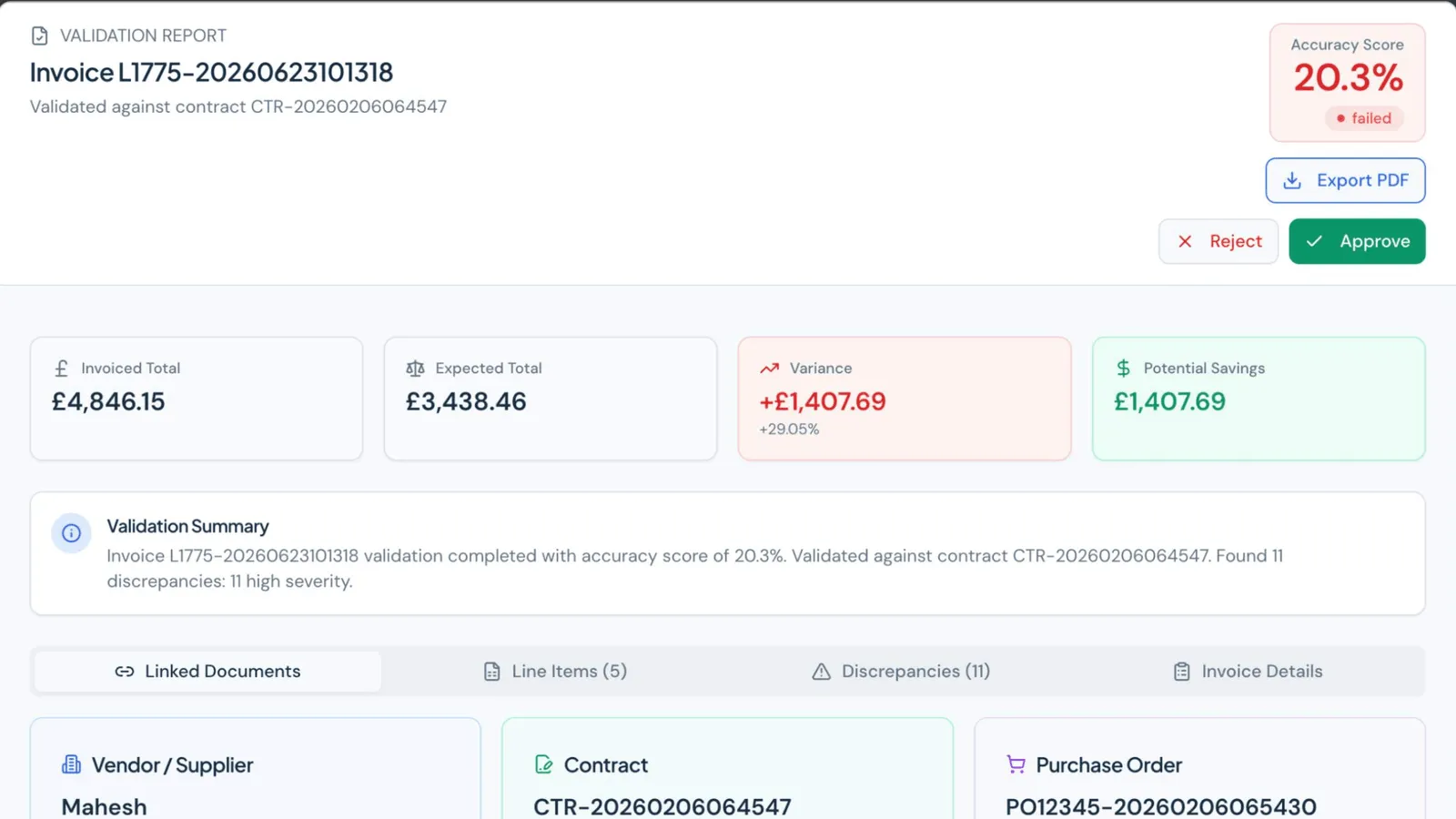
PayRight validation report for an invoice, with accuracy score, invoiced and expected totals, variance, potential savings and linked contract and purchase order

RAG and AI chatbots

PayRight: AI that checks every supplier invoice against the contract, with a human in the loop

A UK contract compliance and invoice assurance platform. AI extracts contract clauses, people confirm them, and every invoice is scored against contract and PO.

Client
PayRight, powered by GovernTerms (UK)
Role
AI full-stack developer
When
2026
  • Claude Code
  • React
  • Node.js + TypeScript
  • PostgreSQL / Supabase
  • OCR and document extraction
  • Role-based access control
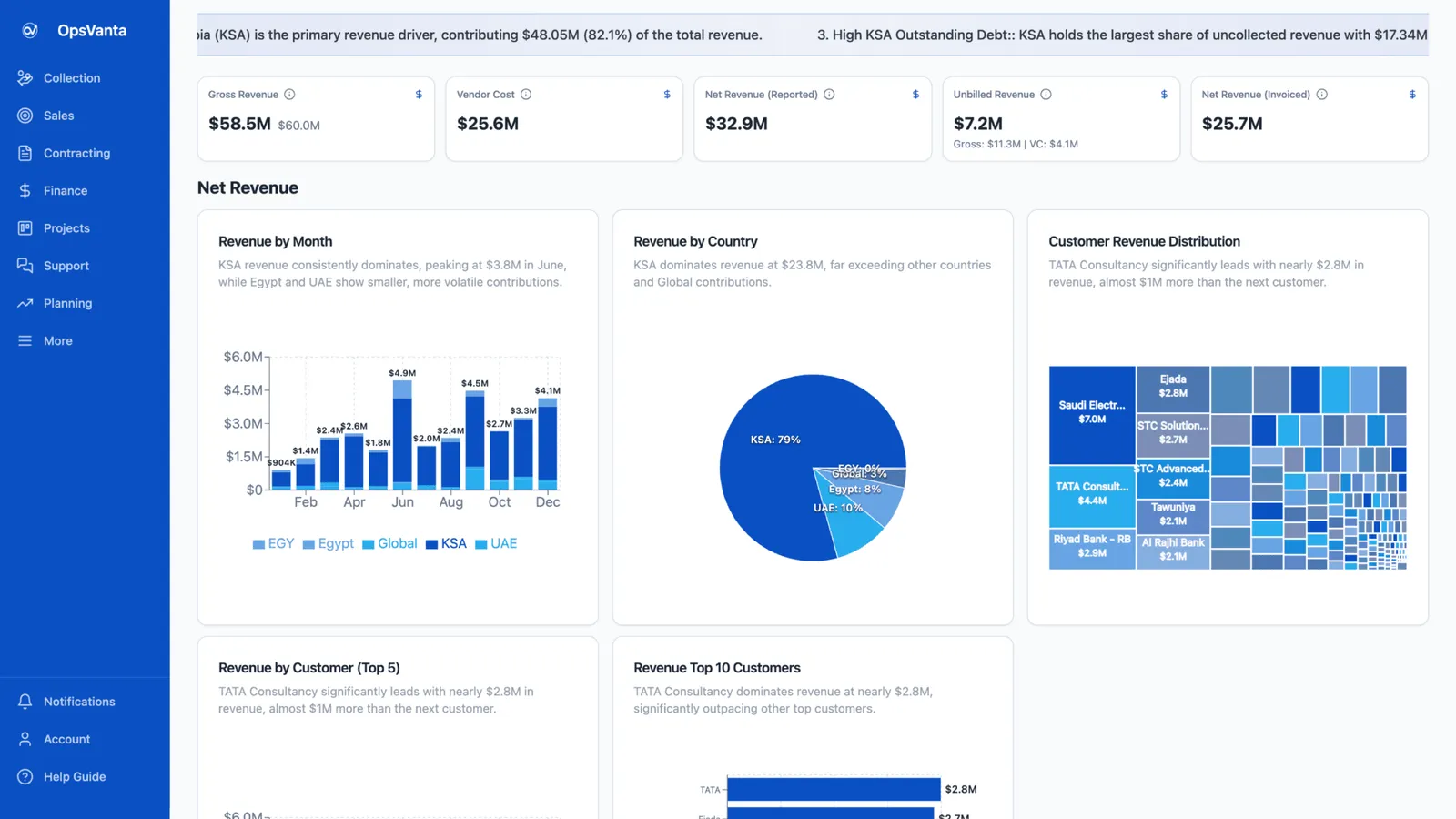
OpsVanta revenue dashboard with revenue KPIs, revenue by month, revenue by country and customer revenue distribution

MVP and SaaS development

OpsVanta: one platform for the whole revenue lifecycle at IST Networks

An internal ERP built solo with Lovable and Claude Code on Lovable Cloud, running sales, projects, tickets, collections, finance and AI insights in one place.

Client
IST Networks
Role
Solo developer, working directly with the CEO
When
2025–2026
  • Lovable
  • Claude Code (Opus)
  • GitHub
  • Lovable Cloud (Supabase)
  • PostgreSQL with row-level security
  • Edge Functions

How it's built

The architecture, step by step

One tool instead of five spreadsheets

  1. Data sources

    Sheets, databases, APIs

  2. Python service

    Cleans, joins and checks data

    • Python
  3. Storage

    One source of truth

    • Supabase
    • Firebase
  4. Dashboard

    Live numbers, filters, exports

    • React
  5. Your team

    Roles decide who sees what

Why this stack

  • Python connects to almost anything your team already uses.
  • Start with the one task that eats the most time, then grow.
  • Access control from day one, so the right people see the right data.

Typical starting points. The final stack is chosen per project and written into your scope.

Questions

Why build a custom tool instead of buying software?

When off-the-shelf tools don't match how your team works, people fall back to spreadsheets and copy-paste. A small custom tool removes that one painful task and grows only as far as you need.

Which technology do you use?

Python for the data work and integrations, with a web dashboard on top. Python connects to the spreadsheets, databases and APIs most teams already use.

Who can see the data?

Access control is built in from day one, so each person sees only what their role allows.

Tell me which task eats your team's week

A 30-minute call is enough to tell whether it fits, what the first version should include, and how long it takes.

Book a 30-minute call